
Author- Mariam Lakdawala (Registered Dietician)
Common questions I generally get from my patients suffering from obesity,
“I don’t eat much, still why am I gaining weight?”
“I eat less than one of my friend, but why is she so thin and I am not?”
My answer to such questions is simple, “Don’t only see how much is on your plate, but also see ‘what’ is on your plate”.
The basic rule of weight loss is to restrict the overall quantity of food and increase the calorie burning capacity of the body. However, this rule has been outdated as only quantity restriction in the absence of food quality management, will not result in positive weight loss outcomes. Also a good quality diet which consists of good quantities of proteins and fiber keeps you full for longer and delays the intake of subsequent meal.
Though factors like genetics and heredity play a major role in adding those kilograms, ‘food’ can also be a major factor for tipping the scales towards obesity. If the quality of the diet is poor, food becomes the major cause of obesity. Your food plate determines the quality of your meals. An ideal food plate must have all the major (macro) nutrients i.e. carbohydrates (also includes fiber), proteins and fats in correct proportions.
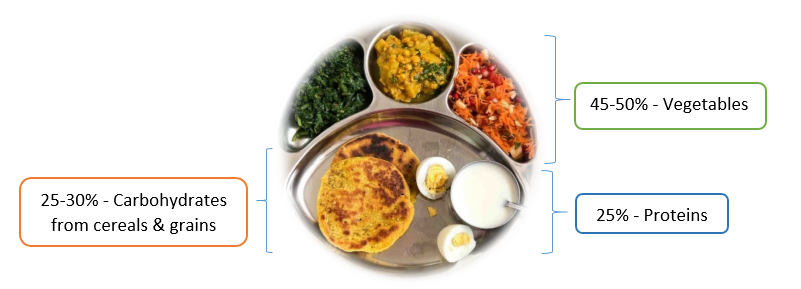
In India, our diet is rich in carbohydrates with very less quantities of vegetables and proteins. This has an adverse impact on our metabolism and exposes us to various metabolic diseases, including obesity. In metropolitan cities the dependence on ready to eat processed foods like biscuits, breads, noodles, sausages/ nuggets etc is much higher in order to save time. These processed foods are generally high in sugars, salt and fat which makes them less nutritious and dense with empty calories. Poor quality diet coupled with lack of physical activity just makes it worse and has played a big role in increasing obesity levels.
The quality and quantity of food are two sides of the same coin. Both the aspects are equally important not only for weight loss but also for maintaining good health and must not be ignored.
